RICH DAD POOR DAD: Book Review
BY Robert Kiyosaki and Sheron Lechter
I just want to ask if you want to read something good, why are you not reading this book? You must read “Rich Dad Poor Dad” if you want financial freedom.After reading this book you will become financially educated. This book will provide you financial literacy which you will never get from schools and colleges.This book explains why rich gets more richer and why poor gets more poorer.Rich man invests on assets, poor on expenses and middle class on liabilities thinking that they are assets.
This book says that if you do not keep yourself out of the rat race you will always remain a rat even when you win.
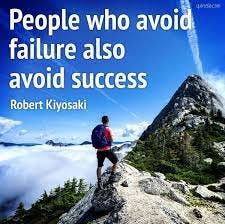
“People who avoid failure also avoid success”
Difference between rich dad and poor dad
Poor Dad: The rich should pay more in taxes
Rich Dad: Taxes reward those who produce
Poor Dad: Study hard so you can find a good company to work for
Rich Dad: Study hard so you can find a good company to buy
Poor Dad: I’m not rich because I have children
Rich Dad: I must become rich because I have children
Poor Dad: Don’t talk about money over dinner
Rich Dad: Talk about money and business over dinner
Poor Dad: “Don’t take risks.”
Rich Dad: “Learn to manage risk.”
Poor Dad: A house is the biggest asset you own
Rich Dad: A house is a liability
Poor Dad: Pay your bills first
Rich Dad: Pay your bills last
Poor Dad: struggles to save a few dollars
Rich Dad: creates investments
Poor Dad: teaches how to write a strong resume
Rich Dad: teaches how to write a strong business and financial plan
Poor Dad: “I’ll never be rich.”
Rich Dad: “I’m a rich man, and rich people don’t do this.
RICH DAD LESSON: Why rich people pay less in taxes
When presidents promise to raise taxes on the rich, they typically mean the middle class. Not the real rich.
Lesson 1: The rich don’t work for money
“The poor and middle-class work for money. The rich have money work for them.”
Lesson 2: why teach financial literacy?
“It’s not how much money you make. It’s how much money you keep.”
Robert Kiyosaki retired at the age of 47. He still works, but for him and his wife, Kim, working is an option as their wealth will continue to grow automatically.
In this section of Rich Dad, Poor Dad, Robert Kiyosaki shares a simple story. In 1923, the greatest leaders and richest businessmen joined together for a meeting in Chicago. Twenty-five years later, nine of them had their life end in the following ways:
- Four died broke
- One went insane
- Two were released from prison
- Two committed suicide
This unfortunate turn was likely due to their lives being drastically affected by the 1929 stock market crash and the Great Depression.
The biggest financial lesson to learn is that it’s all about how much money you keep, not how much you make. And without financial literacy, you’ll lose your money soon.
Growing up, poor dad recommended that Robert read books while rich dad recommended that Robert master financial literacy. Robert shares, “If you are going to build the Empire State Building, the first thing you need to do is dig a deep hole and pour a strong foundation. If you are going to build a home in the suburbs, all you need to do is pour a six-inch slab of concrete. Most people, in their drive to get rich, are trying to build an Empire State Building on a six-inch slab.”
“GOLDEN RULE: HE WHO HAS THE GOLD MAKES THE RULE”
LESSON 3: Mind your own business
“The rich focus on their asset columns while everyone else focuses on their income statements.”
When someone asks the average person, “What is your business?” they typically respond with their profession. However, they are not owners of the company they work for. They still need their own business. Otherwise, they’ll spend their life working for everyone but themselves. That’s the importance of minding your own business.
Here are some assets that Robert recommends that you or your children acquire:
- “Businesses that do not require my presence. I own them, but they are not managed or run by other people. If I have to work there, it’s not a business. It becomes my job.
- Stocks
- Bonds
- Income-generating real estate
- Notes (IOUs)
- Royalties from intellectual property such as music, scripts, and patents
- Anything else that has value, produces income, or appreciates, and has a ready market”
Rich dad used to say, “If you don’t love it, you won’t take care of it.”
You can keep your day job, but you should also start buying assets like those listed above.
Lesson 4: History of Taxes and The Power of corporations
“My rich dad just played the game smart, and he did it through corporations– the biggest secret of the rich.”
The poor often say, “‘Why don’t the rich pay for it?’ or ‘The rich should pay more in taxes and give it to the poor.’” However, the real rich never pay taxes. The people who pay taxes are the educated, middle class.
Poor dad: paid to spend money and hire people; government gains respect the bigger it gets
Rich dad: gains respect of investor by spending and hiring less
Poor dad: the rich are ‘greedy crooks’
Rich dad: the government are ‘lazy thieves’
The rich don’t get taxed as tax laws help them to create jobs and provide housing. Thus, the government is dependent on the middle class for their tax revenue.
Knowing the law can help save you money (while also making sure you follow it).
Poor dad: climb the corporate ladder
Rich dad: own the corporate ladder
Financial IQ is made up of four key areas:
- Accounting: ability to read numbers
- Investing: the concept of money making money
- Understanding markets: knowing supply and demand
- The law: knowing the tax advantages and protections your corporation can provide
- Tax advantages: corporations can pay expenses before taxes, which employees can’t do. A corporation can spend everything it can and be taxed only on everything left over. You can expense car payments, insurance, repairs, health club memberships, and most restaurant meals.
- Protection from lawsuits: The rich use corporations to protect their assets from creditors, whereas the poor and middle class try to own everything themselves.
Chapter Five: Lesson 5: The Rich Invent Money
“Often in the real world, it’s not the smart who get ahead, but the bold.”
However, when we’re so afraid that we start doubting ourselves, we fail to push forward. Instead, it’s the bold who get ahead.
Aim to convert your fear into power.
It’s better to be making millions from the assets you build than aiming to get a raise. This period is a great era to be building assets.
Wealth over the years
- 300 years ago: the person who owns land
- Later: the person who owns factories and production
- Today: the person with the most timely information
“The players who get out of the Rat Race the quickest are the people who understand numbers and have creative financial minds.”
It is possible to have the money yet still struggle to move ahead financially.
Some people have a great opportunity present itself only to fail to have enough money to take advantage of it. Others have a fantastic opportunity present itself only to lack the ability to recognize that it’s a great opportunity (and they may even have the money to take advantage).
The strategy of the average person is: “Work hard, save, and borrow.” But instead of working hard, they should aim to improve their financial intelligence so that they can make more money. The people who get rich the fastest are those who realize that money isn’t real.
“The single most powerful asset we all have is our mind. If it is trained well, it can create enormous wealth.”
Today, savers are considered losers. The reason for this is because interest rates have never been lower. Plus, banks now charge you for holding your money.
At the time Rich Dad Poor Dad was published, there had been three stock market crashes in 30 years.
- 1989–1990: real estate
- 2001–2002: dot-com bubble burst
- 2008–2009: housing bubble burst
All of these stock market crashes were investment opportunities.
Which one sounds harder?
- “Work hard. Pay 50% in taxes. Save what is left. Your savings earn 5%, which is also taxed. OR
- Take the time to develop your financial intelligence. Harness the power of your brain and asset column.”
Most of Robert Kiyosaki’s financial growth comes from real estate and small-cap stocks.
“The problem with ‘secure’ investments is that they are often sanitized, that is, made so safe that the gains are less.”
“It’s not gambling if you know what you’re doing. It’s gambling if you’re just throwing money into a deal and praying.”
Robert Kiyosaki shares, “Most people never win because they’re more afraid of losing. That is why I found school so silly. In school, we learn that mistakes are bad, and we are punished for making them. Yet if you look at the way humans are designed to learn, we learn by making mistakes. We learn to walk by falling down. If we never fell down, we would never walk.”
People’s fear of losing causes them to not be rich. “People who avoid failure also avoid success.”
Three skills of an investor:
- Find an opportunity that everyone else missed: see with your mind instead of your eyes
- Raise money: know how to raise capital outside of a bank
- Organize smart people: hire people more intelligent than you
Chapter Six: Lesson 6: Work to Learn — Don’t Work For Money
“Job security meant everything to my educated dad. Learning meant everything to my rich dad.”
During an interview with a journalist, Robert Kiyosaki learned that the journalist strived to become a best-selling author. He realized she was a great writer and that she should pursue that. She told him that she had tried, but no one was interested. He accidentally offended her when he told her to take a sales course so she could promote herself. She became defensive.
She replied, “I have a master’s degree in English literature. Why would I go to school to learn to be a salesperson? I am a professional. I went to school to be trained in a profession, so I would not have to be a salesperson. I hate salespeople. All they want is money.” She packed her things. Robert Kiyosaki gently pointed out that he was the best-selling author, not the best-writing author. This statement only infuriated her more, and the interview ended.
The world has many successful and talented people: doctors, lawyers, dentists. And still, they struggle financially. But as a wise business consultant once said, “They are one skill away from great wealth.” If you took your skillset and paired it with financial intelligence, accounting, investing, marketing, or law, you could achieve great wealth.
If that journalist had instead picked up a job at an ad agency to learn how to sell, she could go on to create great wealth with her writing.
Rich dad says, “You want to know a little bit about a lot.” In school and at work, you’re expected to specialize. Those who earn promotions tend to be specialists. However, Robert Kiyosaki’s rich dad always recommended the opposite. That’s why, throughout the years, Robert would work in different areas of his rich dad’s company. He was expected to attend meetings with lawyers, bankers, accountants. It was essential to the rich dad for Robert to know every aspect of creating an empire.
When Robert Kiyosaki had quit his high-paying job, his poor dad had a heart to heart talk with him, failing to understand his mindset for quitting.
Poor dad: values job security
Rich dad: values learning
Poor dad: assumed Robert went to school to learn how to be a ship’s officer
Rich dad: knew Robert went there to study international trade
The reason Robert had quit his job was so that he could learn how to lead people as his rich dad said, “If you’re not a good leader, you’ll get shot in the back, just like they do in business.”
“Job is an acronym for ‘Just Over Broke.’”
Robert Kiyosaki recommends taking on jobs where you can learn new skills instead of jobs that pay the most.
“Are workers looking into the future or just until their next paycheck, never questioning where they are headed?”
The best advice Robert Kiyosaki has for those looking to earn more money is to pick up a second job that’ll teach them a second skill.
Management Skills Needed for Success:
- Management of cash flow
- Management of systems
- Management of people
“The most important specialized skills are sales and marketing.”
Robert Kiyosaki’s friend Blair Singer shares, “Sales = Income. Your ability to sell– to communicate and position your strengths– directly impacts your success.”
Law of Money: “Give, and you shall receive.”
Chapter Seven: Overcoming Obstacles
“The primary difference between a rich person and a poor person is how they manage fear.”
There are five core reasons why even the financially literate don’t become financially independent:
- Fear
- Cynicism
- Laziness
- Bad habits
- Arrogance
Not even the rich, like losing money. No one does really. Rich dad says, “Some people are terrified of snakes. Some people are terrified of losing money. Both are phobias.” That’s why it was so crucial for Robert’s rich dad to teach his two sons how to take risks at a young age. The younger you are, the easier it is to become rich.
“Rich dad knew that failure would only make him stronger and smarter.”
Losers are defeated by loss. Winners are inspired by loss. You can still hate losing without being afraid of it.
Most people invest in low-yield mutual funds because it’s the safe thing to do. But that’s not the portfolio of a winner.
To be successful, you’ll need to be focused, instead of balanced.
FOCUS: Follow One Course Until Successful
Don’t let doubt cause you not to act. Avoid remarks from friends and family, such as, “‘What makes you think you can do that?’ ‘If it’s such a good idea, how come someone else hasn’t done it?’ ‘That will never work. You don’t know what you’re talking about.’”
Investors know that when it’s a period of doom and gloom, that’s the best time to make money.
When it comes to financial education, you need to know the difference between good debt and bad debt. Analyze instead of criticizing.
Most people say they’re too busy to focus on their wealth and health, but really they’re avoiding it.
“Rich dad believed the words ‘I can’t afford it’ shut down your brain. ‘How can I afford it?’ opens up possibilities, excitement, and dreams.” Instead of buying his kids everything they wanted, rich dad asked them to think about how they can afford it. Rich dad never gave Robert or Mike anything. The boys had to pay for college on their own.
“What I know makes me money. What I don’t know loses me money.”
Chapter Eight: Getting Started
A gold miner in Peru once told Robert Kiyosaki, “There is gold everywhere. Most people are not trained to see it.”
Robert said this was also true for him in real estate. He said he could find about four to five excellent properties a day, whereas others may look and find none.
10 Steps to Develop Your God-given Powers
- Find a reason greater than reality: the power of spirit
- A young woman who dreamed of going to the Olympics would swim every morning for three hours before going to school. She also spent her weekends studying to maintain high grades. When asked why, she responded, “I do it for myself and the people I love. It’s love that gets me over the hurdles and sacrifices.”
2. Make daily choices: the power of choice
- With every dollar we receive, we choose whether we become: rich, poor, or the middle class. However, you need to train your children to know how to manage your assets. Otherwise, they’ll be lost in the next generation.
- It’s important to learn how to invest before investing.
3. Choose friends carefully: the power of association
- You don’t have to choose friends based on their financial statements.
- Choose friends who talk about money and are interested in the subject.
- People with money often report that their friends without money never ask them how they did it. But they do ask for: a loan or a job
4. Master a formula and then learn a new one: the power of learning quickly
- Study what you want to do. For example, if you want to be a cook, study cooking.
- If you want to make money, don’t work for it.
- Most people learn but fail the most crucial step: action.
- It’s not what you know but how fast you learn.
5. Pay yourself first: the power of self-discipline
- Without self-discipline, you wouldn’t know how to manage a million dollars if you were to receive it.
- You’ll only get pushed around in life if you lack self-discipline and internal control.
- Three most important management skills to start your own business:
- Cash flow
- People
- Personal time
6.
- People who pay themselves first end up using the money to acquire assets that pay for their expenses, and then they’re leftover is income. People who pay themselves last, lose all their money with expenses.
- Even if your cash flow is far less than your bills, you need to pay yourself first.
- Robert Kiyosaki has more liabilities than most of the population, but he uses tenants to pay for his debts.
- Tips for paying yourself first:
- “Don’t get into large debt positions that you have to pay for. Keep your expenses low.”
- Don’t dip into your savings when pressure builds. Use the pressure to find new ways of making more money.
- Savings need to be used to make more money instead of paying bills.
7. Pay your brokers well: the power of good advice
- Pay professionals well and have expensive attorneys, accountants, real estate brokers, and stockbrokers. Their services should be making you money. Those professionals who make more will also make you more money.
7. Be an Indian giver: the power of getting something for nothing
8. Use assets to buy luxuries: the power of focus
9. Choose heroes: the power of myth
- Robert Kiyosaki’s heroes are Warren Buffett, Peter Lynch, George Soros, etc.
10. Teach and you shall receive: the power of giving
- Robert’s rich dad taught him to be charitable. His poor dad taught him to give away his time and knowledge, but not money.
- Rich dad says, “If you want something, you first need to give.”
- If you want money, give money.
Chapter Nine: Still Want More? Here Are Some To Do’s
Stop doing what you’re doing.
- If it’s not working, try something new.
Look for new ideas.
- Read how-to books with formulas on topics you want to learn more about.
- Read: The 16 Percent Solution by Joel Moskowitz
Find someone who has done what you want to do.
- Find the expert who has done something you want to do and pick their brain so you can learn from them.
Take classes, read, and attend seminars.
- Many classes are free or low cost, search the internet for them so you can absorb more knowledge.
Shop for bargains in all markets.
“Profits are made in the buying, not in the selling.”
- Act now!
Action always beats inaction.

Comments
Post a Comment